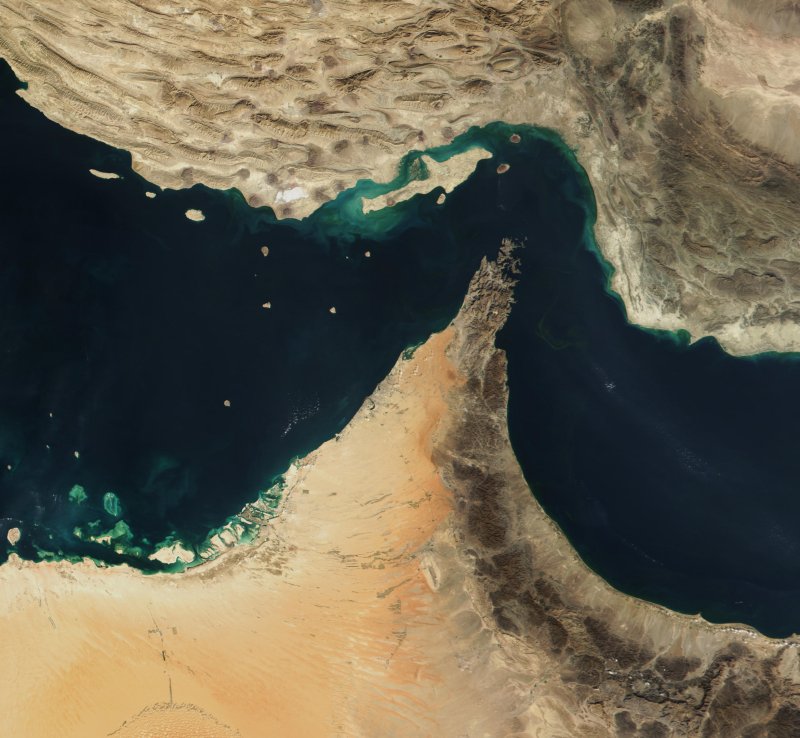
The Strait of Hormuz, or estrecho de ormuz as it is known in Spanish, is far more than just a waterway; it is a critical artery of the global economy, a geopolitical flashpoint, and a vital conduit for the world's energy supply. Situated at the mouth of the Persian Gulf, this narrow passage commands a strategic position that has profound implications for international trade, energy security, and global stability. Any disruption to its flow sends immediate tremors through financial markets and highlights the delicate balance of power in one of the most sensitive regions on Earth.
Understanding the Strait of Hormuz: Where the World's Energy Flows
Geographically, the Strait of Hormuz is positioned between the coastlines of Iran to the north and Oman's Musandam Governorate to the south. It serves as the sole maritime link connecting the vast, oil-rich Persian Gulf with the open waters of the Gulf of Oman and, subsequently, the Arabian Sea and beyond. This unique location makes it the indispensable exit route for the vast majority of oil and natural gas produced by Middle Eastern powerhouses, including Saudi Arabia, Iraq, UAE, Kuwait, and Qatar, destined for international markets.
Despite its immense strategic importance, the estrecho de ormuz is remarkably narrow. At its most constricted point, it measures a mere 54 kilometers (approximately 34 miles) across. This physical bottleneck, combined with the sheer volume of traffic, underscores its vulnerability. Understanding its location is key to grasping its geopolitical significance: it's a chokepoint where geography, economics, and politics converge.
The Unrivaled Flow: Oil, Gas, and Global Trade
The numbers associated with the Strait of Hormuz are staggering and paint a clear picture of its indispensable role. Around 20% of the world's total crude oil production, an astonishing figure, transits through these waters daily. According to the U.S. Energy Information Administration (EIA), this amounted to roughly 20 million barrels of oil per day, a substantial portion of global crude consumption. This isn't just about oil; a similar proportion of the global liquefied natural gas (LNG) trade also relies on this passage, primarily from major exporters like Qatar and the United Arab Emirates to energy-hungry markets in Asia.
The United Nations Conference on Trade and Development (UNCTAD) reported that an average of 144 vessels traverse the strait daily. This bustling maritime traffic includes a diverse fleet: approximately 37% are oil tankers carrying crude and refined products, 17% are container ships vital for general cargo trade, and 13% are bulk carriers transporting raw materials. These figures highlight that the impact of any disruption extends far beyond energy, threatening global supply chains for a multitude of goods. The continuous, unimpeded flow through the Strait of Hormuz: Global Oil Lifeline and Geopolitical Hotspot is, therefore, crucial for maintaining predictable prices, stable economies, and smooth international commerce worldwide.
A Geopolitical Crucible: Tensions and Threats
The strategic importance of the estrecho de ormuz is amplified during times of geopolitical conflict and tension. The Middle East, unfortunately, is no stranger to such periods, and any escalation invariably shines a spotlight on this critical waterway. Iran, with its northern coastline forming a significant part of the strait's boundary, holds considerable sway over its passage and has, on multiple occasions, leveraged this geographical advantage as a deterrent or a response to international pressure.
The history of recent decades is replete with examples. Following the U.S. withdrawal from the 2015 nuclear agreement (JCPOA) in 2018 and the subsequent re-imposition of sanctions against Iran, the region experienced a sharp increase in hostilities. This period saw recurring incidents of attacks on and seizures of oil tankers in the Persian Gulf, reflecting the heightened diplomatic and military standoff. Iran has repeatedly threatened to block the strait in retaliation for sanctions or military actions targeting its interests. For instance, in June 2025 (as per the reference context), the Iranian Parliament reportedly approved measures to close the strait following targeted bombardments. Later, in February 2026, Iran announced temporary closures of maritime areas for naval maneuvers, signaling its capacity and readiness to disrupt traffic if it deems necessary.
These threats are not idle. Any actual closure or significant disruption would immediately impact international crude oil prices, lead to global inflation, and destabilize the economies of countless nations reliant on this energy supply. The constant tension in the Strait of Hormuz: A Volatile Corridor Threatening Global Markets underscores the need for robust international diplomacy and de-escalation efforts to prevent a crisis that could have far-reaching global consequences.
The Ripple Effect of Disruption
Consider the immediate aftermath of a hypothetical closure of the estrecho de ormuz. Energy markets would react with extreme volatility, leading to dramatic spikes in oil and gas prices. This would translate into higher fuel costs for consumers globally, increased operational expenses for businesses, and a potential slowdown in economic growth. Countries heavily dependent on Middle Eastern energy, particularly in Asia, would face severe energy security challenges. Furthermore, insurance premiums for shipping through the region would skyrocket, adding further costs to international trade. The interconnectedness of the global economy means that a single chokepoint's instability can trigger a cascade of negative effects worldwide.
Practical Insight: To mitigate such risks, many nations maintain strategic petroleum reserves, designed to provide a buffer against short-term supply disruptions. However, even these reserves have limits and cannot fully offset a prolonged closure of a passage as critical as the Strait of Hormuz.
Seeking Alternatives: Challenges and Realities
Given the inherent risks associated with such a vital chokepoint, efforts have been made to explore alternative routes for oil and gas exports. Iran itself has taken steps to reduce its sole reliance on the estrecho de ormuz for its own exports. In 2021, Iran inaugurated a new oil terminal in Jask, on the Gulf of Oman coast. This terminal is connected by a 1,000-kilometer (620-mile) pipeline from the Goreh oil field, allowing a portion of Iran's crude to bypass the strait entirely.
However, while this project offers Iran some flexibility, its initial capacity of 300,000 barrels per day is a modest fraction of the total volume transiting the strait. It is far from a comprehensive solution to replace the massive flow of oil and gas from all Persian Gulf producers. For countries like Saudi Arabia and the UAE, while they possess some pipeline infrastructure that can bypass the strait to terminals on the Red Sea or Gulf of Oman, these alternatives are also limited in capacity and not easily scalable to replace the entire volume currently flowing through Hormuz.
Key Takeaway: The geographical and logistical challenges of establishing economically viable, large-scale alternatives for all producers in the region are immense. Building new pipelines across rugged terrain, securing transit rights, and constructing new deepwater terminals represent multi-billion dollar, multi-decade projects. Therefore, for the foreseeable future, the Strait of Hormuz will remain the primary and most efficient outlet for the vast majority of energy exports from the Persian Gulf, cementing its irreplaceable role in global energy infrastructure.
Conclusion
The Strait of Hormuz is more than just a geographical feature; it is a critical pressure valve for the global economy. As the conduit for a fifth of the world's oil and a substantial share of its LNG, its stability directly underpins international energy prices, inflation rates, and financial markets. The persistent geopolitical tensions surrounding the estrecho de ormuz serve as a constant reminder of the fragility of global supply chains and the profound impact that regional conflicts can have on the world stage. Safeguarding the free flow of commerce through this vital corridor remains a paramount concern for governments and international organizations, highlighting the enduring need for diplomatic engagement and strategic stability in the Middle East.